

Nền tảng Android 16 có các thay đổi về hành vi có thể ảnh hưởng đến ứng dụng của bạn. Những thay đổi về hành vi sau đây áp dụng cho tất cả ứng dụng khi chạy trên Android 16, bất kể targetSdkVersion. Bạn nên kiểm thử ứng dụng rồi sửa đổi để hỗ trợ những thay đổi này cho phù hợp (nếu cần).
Ngoài ra, hãy nhớ tham khảo danh sách các thay đổi về hành vi chỉ ảnh hưởng đến những ứng dụng nhắm đến Android 16.
Chức năng cốt lõi
Android 16 (cấp độ API 36) có những thay đổi sau đây nhằm sửa đổi hoặc mở rộng nhiều khả năng cốt lõi của hệ thống Android.
Tối ưu hoá hạn mức JobScheduler
Kể từ Android 16, chúng tôi sẽ điều chỉnh hạn mức thời gian chạy thực thi công việc thông thường và công việc khẩn cấp dựa trên các yếu tố sau:
- Ứng dụng nằm trong nhóm chờ của ứng dụng nào: trong Android 16, các nhóm chờ đang hoạt động sẽ bắt đầu được thực thi theo hạn mức thời gian chạy lớn.
- Nếu lệnh bắt đầu thực thi trong khi ứng dụng ở trạng thái trên cùng: trong Android 16, các lệnh bắt đầu trong khi ứng dụng hiển thị với người dùng và tiếp tục sau khi ứng dụng trở nên không hiển thị sẽ tuân thủ hạn mức thời gian chạy của lệnh.
- Nếu lệnh đang thực thi trong khi chạy Dịch vụ trên nền trước: trong Android 16, những lệnh đang thực thi đồng thời với một dịch vụ trên nền trước sẽ tuân thủ hạn mức thời gian chạy lệnh. Nếu bạn đang tận dụng các công việc để chuyển dữ liệu do người dùng yêu cầu, hãy cân nhắc sử dụng công việc chuyển dữ liệu do người dùng yêu cầu.
Thay đổi này ảnh hưởng đến các tác vụ được lên lịch bằng WorkManager, JobScheduler và DownloadManager. Để gỡ lỗi lý do một công việc bị dừng, bạn nên ghi nhật ký lý do công việc của bạn bị dừng bằng cách gọi WorkInfo.getStopReason() (đối với các công việc JobScheduler, hãy gọi JobParameters.getStopReason()).
Để biết thông tin về cách trạng thái của ứng dụng ảnh hưởng đến những tài nguyên mà ứng dụng có thể sử dụng, hãy xem phần Hạn mức tài nguyên quản lý nguồn. Để biết thêm thông tin về các phương pháp hay nhất giúp tối ưu hoá pin, hãy tham khảo hướng dẫn về cách tối ưu hoá mức sử dụng pin cho các API lập lịch tác vụ.
Bạn cũng nên tận dụng API JobScheduler#getPendingJobReasonsHistory mới được ra mắt trong Android 16 để biết lý do một công việc chưa được thực thi.
Thử nghiệm
Để kiểm thử hành vi của ứng dụng, bạn có thể bật chế độ ghi đè một số hoạt động tối ưu hoá hạn ngạch công việc nhất định miễn là ứng dụng đang chạy trên thiết bị Android 16.
Để tắt chế độ thực thi "trạng thái hàng đầu sẽ tuân thủ hạn mức thời gian chạy của công việc", hãy chạy lệnh adb sau:
adb shell am compat enable OVERRIDE_QUOTA_ENFORCEMENT_TO_TOP_STARTED_JOBS APP_PACKAGE_NAME
Để tắt việc thực thi "các công việc đang thực thi đồng thời với một dịch vụ trên nền trước sẽ tuân thủ hạn ngạch thời gian chạy công việc", hãy chạy lệnh adb sau:
adb shell am compat enable OVERRIDE_QUOTA_ENFORCEMENT_TO_FGS_JOBS APP_PACKAGE_NAME
Để kiểm thử một số hành vi của nhóm chế độ chờ của ứng dụng, bạn có thể đặt nhóm chế độ chờ của ứng dụng bằng lệnh adb sau:
adb shell am set-standby-bucket APP_PACKAGE_NAME active|working_set|frequent|rare|restricted
Để biết ứng dụng của bạn nằm trong nhóm chế độ chờ ứng dụng nào, bạn có thể lấy nhóm chế độ chờ ứng dụng của ứng dụng bằng lệnh adb sau:
adb shell am get-standby-bucket APP_PACKAGE_NAME
Lý do dừng công việc trống bị bỏ dở
Công việc bị bỏ dở xảy ra khi đối tượng JobParameters liên kết với công việc đã được thu thập rác, nhưng JobService#jobFinished(JobParameters,
boolean) chưa được gọi để báo hiệu công việc đã hoàn tất. Điều này cho biết rằng công việc có thể đang chạy và được lên lịch lại mà ứng dụng không biết.
Các ứng dụng dựa vào JobScheduler không duy trì tham chiếu mạnh đến đối tượng JobParameters và giờ đây, thời gian chờ sẽ được cấp lý do dừng công việc mới STOP_REASON_TIMEOUT_ABANDONED thay vì STOP_REASON_TIMEOUT.
Nếu lý do dừng mới bị bỏ dở thường xuyên xuất hiện, hệ thống sẽ thực hiện các bước giảm thiểu để giảm tần suất công việc.
Ứng dụng nên sử dụng lý do dừng mới để phát hiện và giảm số lượng công việc bị bỏ ngang.
Nếu đang sử dụng WorkManager, AsyncTask hoặc DownloadManager, bạn sẽ không bị ảnh hưởng vì các API này thay mặt ứng dụng quản lý vòng đời công việc.
Hoàn toàn không dùng JobInfo#setImportantWhileForeground nữa
Phương thức JobInfo.Builder#setImportantWhileForeground(boolean) cho biết tầm quan trọng của một công việc trong khi ứng dụng lên lịch chạy ở nền trước hoặc khi tạm thời được miễn các quy định hạn chế về chế độ nền.
Phương thức này không được dùng nữa kể từ Android 12 (API cấp 31). Kể từ Android 16, phương thức này không còn hoạt động hiệu quả và việc gọi phương thức này sẽ bị bỏ qua.
Việc xoá chức năng này cũng áp dụng cho
JobInfo#isImportantWhileForeground(). Kể từ Android 16, nếu được gọi, phương thức này sẽ trả về false.
Phạm vi ưu tiên của thông báo truyền tin theo thứ tự không còn là phạm vi toàn cầu nữa
Android apps are allowed to define priorities on broadcast receivers to control
the order in which the receivers receive and process the broadcast. For
manifest-declared receivers, apps can use the
android:priority attribute to define the priority and for
context-registered receivers, apps can use the
IntentFilter#setPriority() API to define the priority. When
a broadcast is sent, the system delivers it to receivers in order of their
priority, from highest to lowest.
In Android 16, broadcast delivery order using the android:priority attribute
or IntentFilter#setPriority() across different processes will not be
guaranteed. Broadcast priorities will only be respected within the same
application process rather than across all processes.
Also, broadcast priorities will be automatically confined to the range
(SYSTEM_LOW_PRIORITY + 1,
SYSTEM_HIGH_PRIORITY - 1). Only system components will be
allowed to set SYSTEM_LOW_PRIORITY, SYSTEM_HIGH_PRIORITY as broadcast
priority.
Your app might be impacted if it does either of the following:
- Your application has declared multiple processes with the same broadcast intent, and has expectations around receiving those intents in a certain order based on the priority.
- Your application process interacts with other processes and has expectations around receiving a broadcast intent in a certain order.
If the processes need to coordinate with each other, they should communicate using other coordination channels.
Các thay đổi nội bộ của ART
Android 16 bao gồm các bản cập nhật mới nhất cho Android Runtime (ART) giúp cải thiện hiệu suất của Android Runtime (ART) và hỗ trợ thêm các tính năng Java. Thông qua Bản cập nhật hệ thống Google Play, hơn một tỷ thiết bị chạy Android 12 (API cấp 31) trở lên cũng có thể sử dụng các điểm cải tiến này.
Khi những thay đổi này được phát hành, các thư viện và mã ứng dụng dựa vào cấu trúc nội bộ của ART có thể không hoạt động chính xác trên các thiết bị chạy Android 16, cùng với các phiên bản Android cũ cập nhật mô-đun ART thông qua bản cập nhật hệ thống Google Play.
Việc dựa vào các cấu trúc nội bộ (chẳng hạn như giao diện không phải SDK) luôn có thể dẫn đến các vấn đề về khả năng tương thích, nhưng điều đặc biệt quan trọng là tránh dựa vào mã (hoặc thư viện chứa mã) tận dụng các cấu trúc ART nội bộ, vì các thay đổi về ART không liên quan đến phiên bản nền tảng mà thiết bị đang chạy và các thay đổi này sẽ được áp dụng cho hơn một tỷ thiết bị thông qua các bản cập nhật hệ thống của Google Play.
Tất cả nhà phát triển đều nên kiểm tra xem ứng dụng của họ có bị ảnh hưởng hay không bằng cách kiểm thử kỹ lưỡng ứng dụng trên Android 16. Ngoài ra, hãy kiểm tra các vấn đề đã biết để xem ứng dụng của bạn có phụ thuộc vào bất kỳ thư viện nào mà chúng tôi đã xác định là dựa vào cấu trúc ART nội bộ hay không. Nếu mã ứng dụng hoặc các phần phụ thuộc thư viện của bạn bị ảnh hưởng, hãy tìm các API công khai thay thế bất cứ khi nào có thể và yêu cầu API công khai cho các trường hợp sử dụng mới bằng cách tạo yêu cầu về tính năng trong công cụ theo dõi lỗi của chúng tôi.
Chế độ tương thích với kích thước trang 16 KB
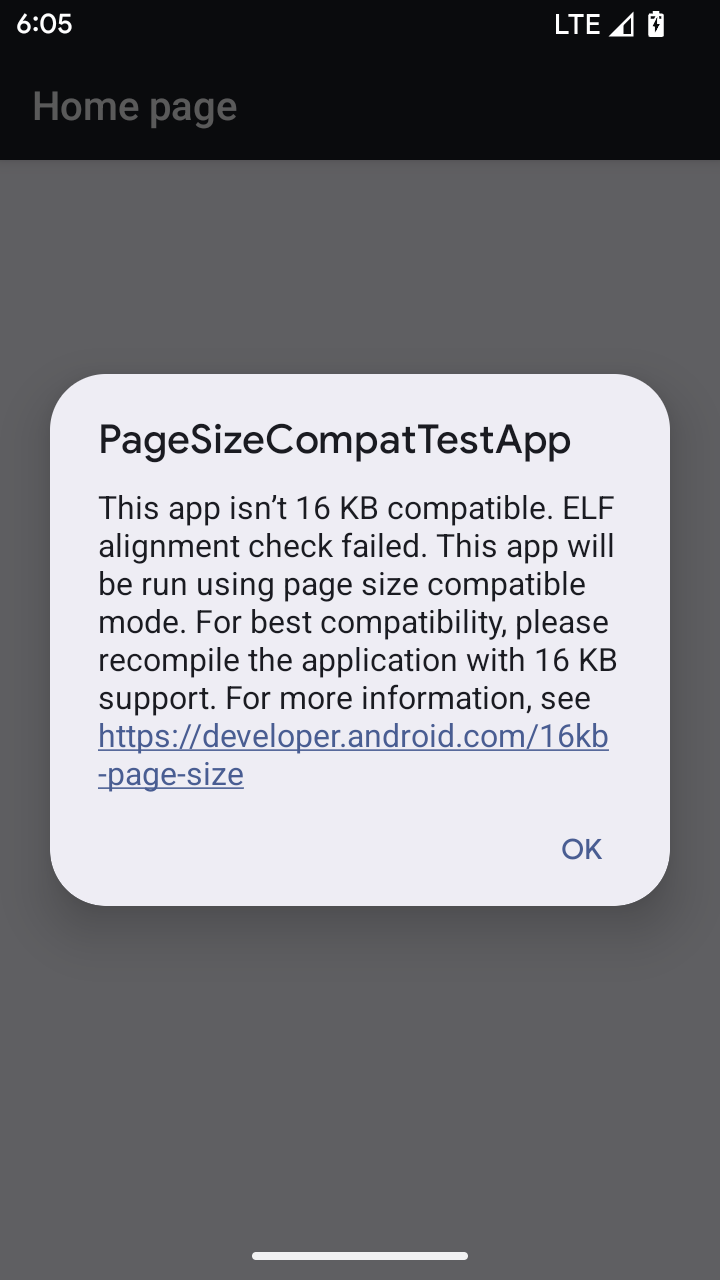
Android 15 引入了对 16 KB 内存页面的支持,以优化平台性能。Android 16 添加了兼容模式,让一些针对 4 KB 内存页面构建的应用可以在配置为 16 KB 内存页面的设备上运行。
当您的应用在搭载 Android 16 或更高版本的设备上运行时,如果 Android 检测到您的应用具有 4 KB 对齐的内存页面,则会自动使用兼容模式并向用户显示通知对话框。在 AndroidManifest.xml 中设置 android:pageSizeCompat 属性以启用向后兼容模式,将会阻止应用启动时显示对话框。如需使用 android:pageSizeCompat 属性,请使用 Android 16 SDK 编译您的应用。
为了实现最佳性能、可靠性和稳定性,应用仍应以 16 KB 对齐。如需了解详情,请参阅我们近期发布的博文,了解如何更新应用以支持 16 KB 的内存页面。
Trải nghiệm người dùng và giao diện người dùng hệ thống
Android 16 (cấp độ API 36) có những thay đổi sau đây nhằm mang đến trải nghiệm người dùng nhất quán và trực quan hơn.
Ngừng sử dụng các thông báo hỗ trợ tiếp cận gây phiền toái
Android 16 không dùng thông báo hỗ trợ tiếp cận nữa, được xác định bằng việc sử dụng announceForAccessibility hoặc gửi sự kiện hỗ trợ tiếp cận TYPE_ANNOUNCEMENT. Những điều này có thể tạo ra trải nghiệm người dùng không nhất quán cho người dùng TalkBack và trình đọc màn hình của Android, đồng thời các giải pháp thay thế sẽ phục vụ tốt hơn nhiều nhu cầu của người dùng trên nhiều công nghệ hỗ trợ của Android.
Ví dụ về các lựa chọn thay thế:
- Đối với các thay đổi đáng kể về giao diện người dùng như thay đổi cửa sổ, hãy sử dụng
Activity.setTitle(CharSequence)vàsetAccessibilityPaneTitle(java.lang.CharSequence). Trong Compose, hãy sử dụngModifier.semantics { paneTitle = "paneTitle" } - Để thông báo cho người dùng về những thay đổi đối với giao diện người dùng quan trọng, hãy sử dụng
setAccessibilityLiveRegion(int). Trong Compose, hãy sử dụngModifier.semantics { liveRegion = LiveRegionMode.[Polite|Assertive]}. Bạn nên sử dụng các thông báo này một cách tiết kiệm vì chúng có thể tạo thông báo mỗi khi Chế độ xem được cập nhật. - Để thông báo cho người dùng về lỗi, hãy gửi
AccessibilityEventthuộc loạiAccessibilityEvent#CONTENT_CHANGE_TYPE_ERRORvà đặtAccessibilityNodeInfo#setError(CharSequence)hoặc sử dụngTextView#setError(CharSequence).
Tài liệu tham khảo cho API announceForAccessibility không dùng nữa bao gồm thêm thông tin chi tiết về các giải pháp thay thế được đề xuất.
Hỗ trợ chế độ thao tác bằng 3 nút
Android 16 brings predictive back support to the 3-button navigation for apps that have properly migrated to predictive back. Long-pressing the back button initiates a predictive back animation, giving you a preview of where the back swipe takes you.
This behavior applies across all areas of the system that support predictive back animations, including the system animations (back-to-home, cross-task, and cross-activity).
Biểu tượng ứng dụng theo chủ đề tự động
从 Android 16 QPR 2 开始,Android 会自动将主题应用于应用图标,以打造一致的主屏幕体验。如果应用未提供自己的带主题的应用图标,就会发生这种情况。应用可以通过在自适应图标中添加单色图层来控制主题化应用图标的设计,并在 Android Studio 中预览应用图标的外观。
Kiểu dáng thiết bị
Android 16 (cấp độ API 36) có những thay đổi sau đây đối với các ứng dụng khi được chủ sở hữu thiết bị ảo chiếu lên màn hình.
Chế độ ghi đè của chủ sở hữu thiết bị ảo
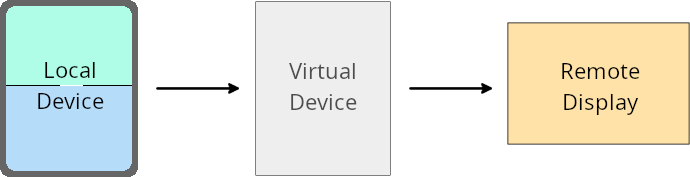
Chủ sở hữu thiết bị ảo là một ứng dụng đáng tin cậy hoặc có đặc quyền, có thể tạo và quản lý một thiết bị ảo. Chủ sở hữu thiết bị ảo chạy các ứng dụng trên thiết bị ảo, sau đó chiếu các ứng dụng đó lên màn hình của một thiết bị từ xa, chẳng hạn như máy tính cá nhân, thiết bị thực tế ảo hoặc hệ thống thông tin giải trí trên ô tô. Chủ sở hữu thiết bị ảo đang dùng một thiết bị cục bộ, chẳng hạn như điện thoại di động.
Ghi đè cho mỗi ứng dụng
Trên các thiết bị chạy Android 16 (cấp độ API 36), chủ sở hữu thiết bị ảo có thể ghi đè chế độ cài đặt ứng dụng trên một số thiết bị ảo mà chủ sở hữu thiết bị ảo quản lý. Ví dụ: để cải thiện bố cục ứng dụng, chủ sở hữu thiết bị ảo có thể bỏ qua các hạn chế về hướng, tỷ lệ khung hình và khả năng thay đổi kích thước khi chiếu ứng dụng lên màn hình ngoài.
Các thay đổi có thể gây lỗi thường gặp
Hành vi của Android 16 có thể ảnh hưởng đến giao diện người dùng của ứng dụng trên các hệ số hình dạng màn hình lớn, chẳng hạn như màn hình ô tô hoặc Chromebook, đặc biệt là những bố cục được thiết kế cho màn hình nhỏ ở hướng dọc. Để tìm hiểu cách giúp ứng dụng của bạn thích ứng với mọi hệ số hình dạng của thiết bị, hãy xem bài viết Giới thiệu về bố cục thích ứng.
Tài liệu tham khảo
Truyền phát bằng ứng dụng đồng hành
Bảo mật
Android 16 (cấp độ API 36) có những thay đổi nhằm tăng cường tính bảo mật của hệ thống để giúp bảo vệ ứng dụng và người dùng khỏi các ứng dụng độc hại.
Cải thiện độ bảo mật để chống lại các cuộc tấn công chuyển hướng Ý định
Android 16 provides default security against general Intent redirection
attacks, with minimum compatibility and developer changes required.
We are introducing by-default security hardening solutions to Intent
redirection exploits. In most cases, apps that use intents normally won't
experience any compatibility issues; we've gathered metrics throughout our
development process to monitor which apps might experience breakages.
Intent redirection in Android occurs when an attacker can partly or fully control the contents of an intent used to launch a new component in the context of a vulnerable app, while the victim app launches an untrusted sub-level intent in an extras field of an ("top-level") Intent. This can lead to the attacker app launching private components in the context of the victim app, triggering privileged actions, or gaining URI access to sensitive data, potentially leading to data theft and arbitrary code execution.
Opt out of Intent redirection handling
Android 16 introduces a new API that allows apps to opt out of launch security protections. This might be necessary in specific cases where the default security behavior interferes with legitimate app use cases.
For applications compiling against Android 16 (API level 36) SDK or higher
You can directly use the removeLaunchSecurityProtection() method on the Intent
object.
val i = intent
val iSublevel: Intent? = i.getParcelableExtra("sub_intent")
iSublevel?.removeLaunchSecurityProtection() // Opt out from hardening
iSublevel?.let { startActivity(it) }
For applications compiling against Android 15 (API level 35) or lower
While not recommended, you can use reflection to access the
removeLaunchSecurityProtection() method.
val i = intent
val iSublevel: Intent? = i.getParcelableExtra("sub_intent", Intent::class.java)
try {
    val removeLaunchSecurityProtection = Intent::class.java.getDeclaredMethod("removeLaunchSecurityProtection")
    removeLaunchSecurityProtection.invoke(iSublevel)
} catch (e: Exception) {
    // Handle the exception, e.g., log it
} // Opt-out from the security hardening using reflection
iSublevel?.let { startActivity(it) }
Ứng dụng đồng hành không còn được thông báo về thời gian chờ phát hiện nữa
Android 16 introduces a new behavior during
companion device pairing flow to protect the user's location
privacy from malicious apps. All companion apps running on Android 16 are no
longer directly notified of discovery timeout using
RESULT_DISCOVERY_TIMEOUT. Instead, the user is
notified of timeout events with a visual dialog. When the user dismisses
the dialog, the app is alerted of the association failure with
RESULT_USER_REJECTED.
The search duration has also been extended from the original 20 seconds, and the device discovery can be stopped by the user at any point during the search. If at least one device was discovered within the first 20 seconds of starting the search, the CDM stops searching for additional devices.
Khả năng kết nối
Android 16 (cấp độ API 36) có những thay đổi sau đây trong ngăn xếp Bluetooth để cải thiện khả năng kết nối với các thiết bị ngoại vi.
Cải thiện khả năng xử lý tình trạng mất liên kết
Kể từ Android 16, ngăn xếp Bluetooth đã được cập nhật để cải thiện tính bảo mật và trải nghiệm người dùng khi phát hiện thấy mất liên kết từ xa. Trước đây, hệ thống sẽ tự động xoá mối liên kết và bắt đầu một quy trình ghép nối mới, điều này có thể dẫn đến việc ghép nối lại ngoài ý muốn. Chúng tôi nhận thấy trong nhiều trường hợp, các ứng dụng không xử lý sự kiện mất liên kết một cách nhất quán.
Để hợp nhất trải nghiệm, Android 16 đã cải thiện khả năng xử lý mất liên kết với hệ thống. Nếu không xác thực được thiết bị Bluetooth đã liên kết trước đó khi kết nối lại, hệ thống sẽ ngắt kết nối đường liên kết, giữ lại thông tin liên kết cục bộ và hiển thị hộp thoại hệ thống thông báo cho người dùng về việc mất liên kết và hướng dẫn họ ghép nối lại.