
As the graphics processing capabilities of mobile devices advance rapidly, today's mobile games offer console-level expansive worlds and sophisticated visuals. However, extracting maximum performance across diverse GPU architectures and device environments while optimizing power consumption remains one of the most daunting challenges for Android game developers.
To solve these developer pain points, Google provides Android Performance Analyzer, a GPU performance analysis tool that is available as a beta release.
What is the Android Performance Analyzer?
Android Performance Analyzer is a performance analysis tool. Built to handle complex Perfetto traces efficiently, it provides game developers with deep, actionable visibility into rendering pipelines and GPU workloads. Key capabilities include:
- Visual screenshot scrubbing: Rapidly navigate through trace frames visually on the timeline to locate specific rendering events or frame drops.
- AI-assisted custom Perfetto SQL queries: Extract tailored performance metrics (such as ratios, minimum, or maximum values) specific to your game's unique architecture without manual data parsing.
- Side-by-side A/B testing: Compare multiple traces directly within the IDE using side-by-side tabs to seamlessly validate optimization efforts.
- Vulkan CPU timing layer integration: Gain granular insights into CPU execution time of Vulkan API calls.
- In-depth GPU workload profiling: Conduct sophisticated analysis of GPU loads through a broad range of hardware-level render stage timings and counters for precise performance tuning.
Partner case study: Optimizing 'Seven Deadly Sins: Origin'
The Games DevRel team closely collaborated with Netmarble. Netmarble integrated Android Performance Analyzer into the optimization process for their game, The Seven Deadly Sins: Origin, which launched on March 24, 2026.


The Seven Deadly Sins: Origin is an open-world RPG that brings the anime IP to life with high-fidelity visuals and seamless exploration. To maintain its industry-leading graphics on mobile, Netmarble used the Android Performance Analyzer to analyze and resolve GPU bottlenecks. By optimizing complex rendering tasks and thermal efficiency, they delivered a high quality experience that remains fluid and stable for players worldwide.
Using Android Performance Analyzer, Netmarble verified and validated performance changes across the following key optimization scenarios:
Before and after 'Disable world rendering in the UI scenes'
Finding the exact moment a frame drop occurs within massive trace logs is difficult. The team used Android Performance Analyzer's visual screenshot scrubbing functionality to rapidly navigate and verify exactly when the 'Disable world rendering in the UI Scenes' logic was applied, allowing them to instantly observe the resulting performance changes visually and through data.
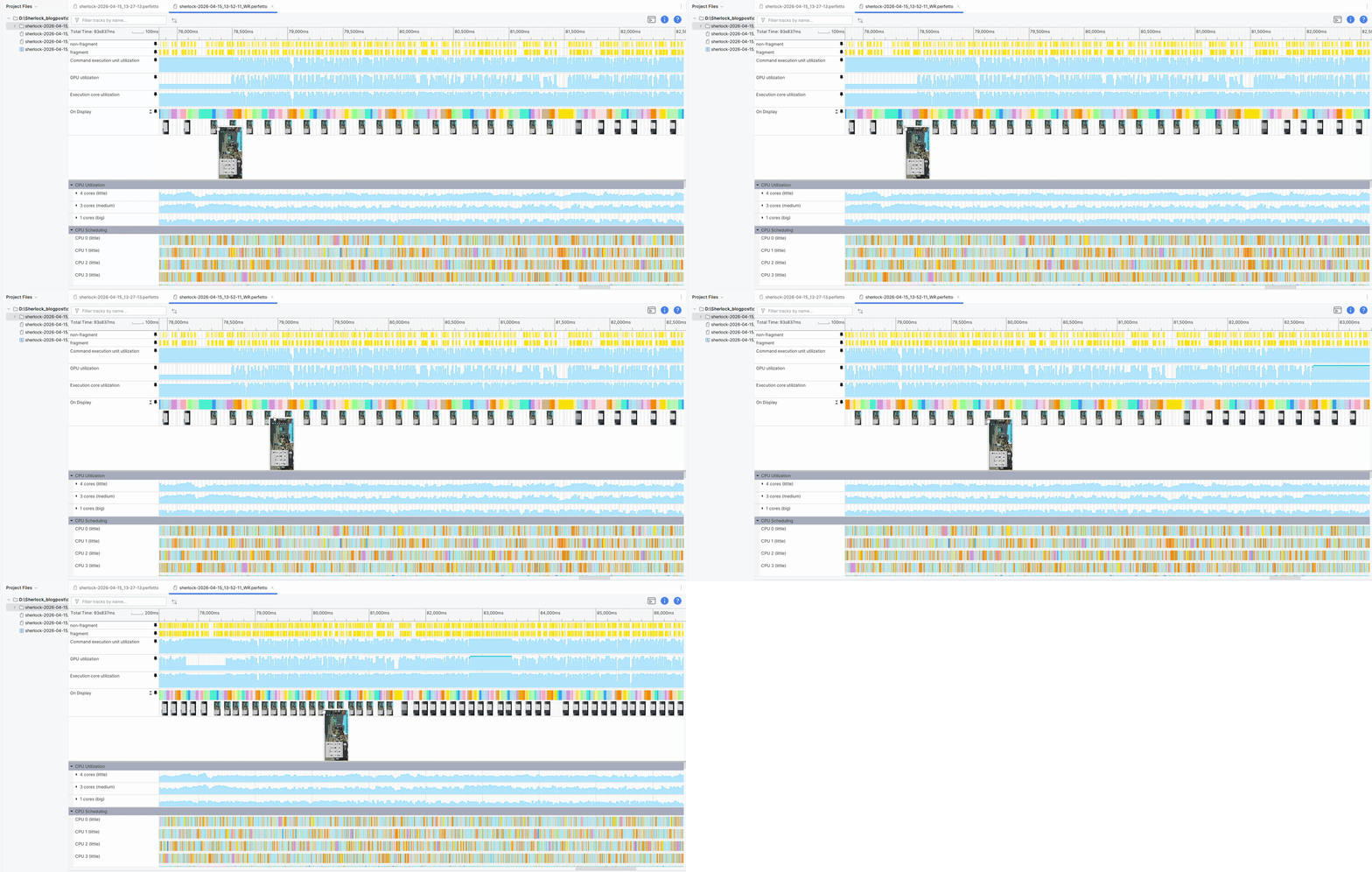
Android Performance Analyzer's screenshot feature makes it straightforward to identify which specific scene corresponds to the collected traces and data. While the screenshot resolution is kept low for efficiency, it is more than sufficient to distinguish between different environments—such as a complex village scene versus a UI scene.
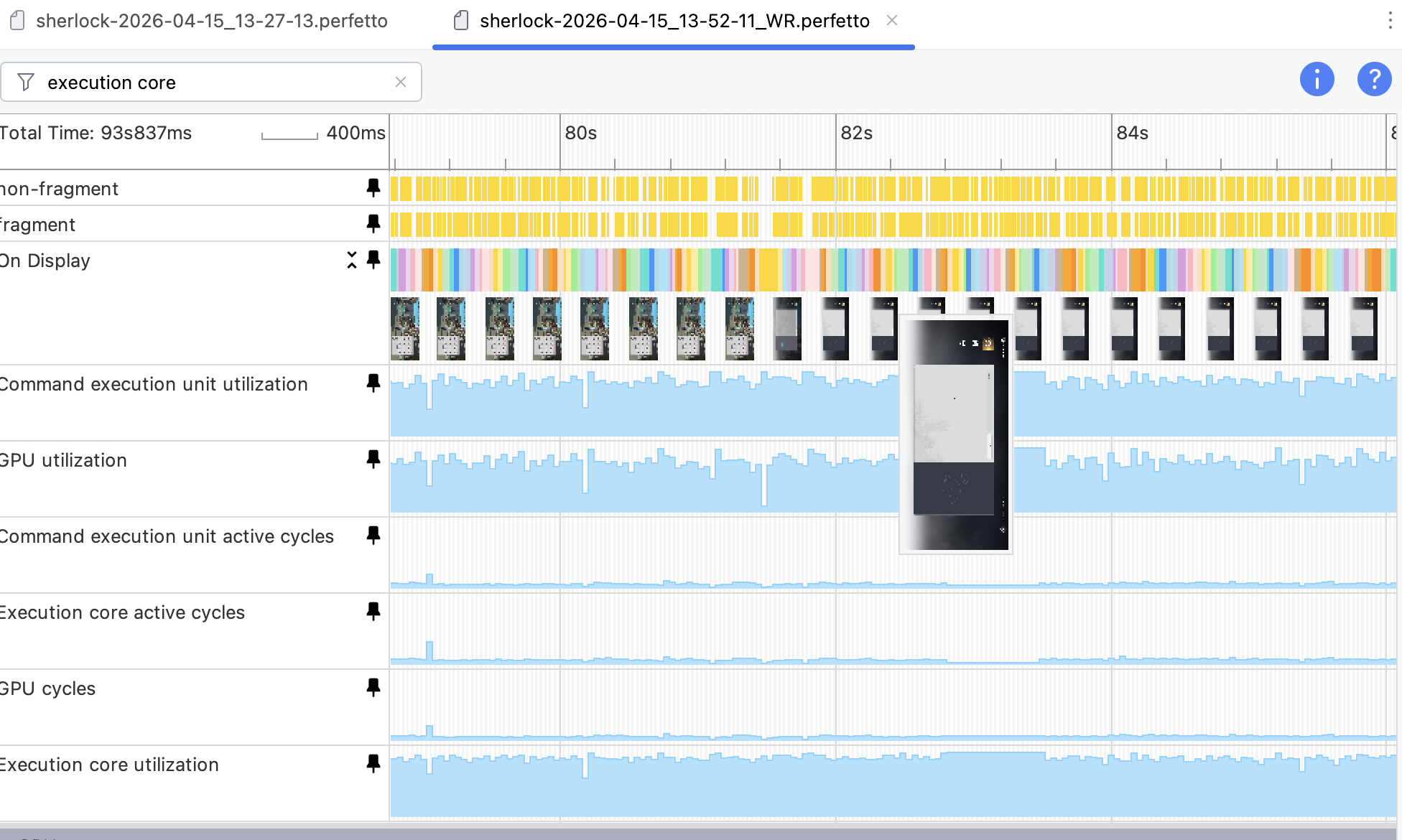
Using this feature, they discovered a critical anomaly: GPU utilization in simple UI scenes was nearly identical to that of high-complexity scenes. This insight revealed that the game world was still being rendered behind the UI, causing significant and unnecessary GPU overhead. As shown in the following image, once world rendering was disabled for UI screens, all GPU hardware counters showed a significant and immediate decrease.
Before and after "Early Z"
Every game requires different metrics to monitor. By using generic Perfetto SQL queries, the team constructed custom performance data to rapidly identify bottleneck areas. This data-oriented approach allowed them to clearly validate the efficiency and performance gains of implementing the Early Z pass.
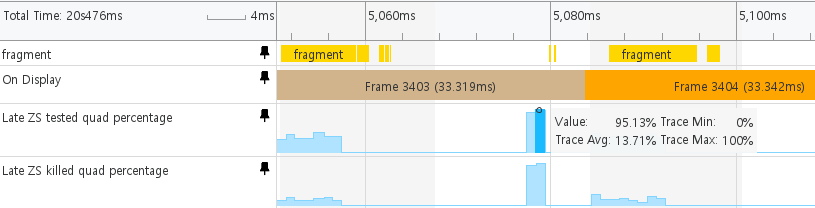
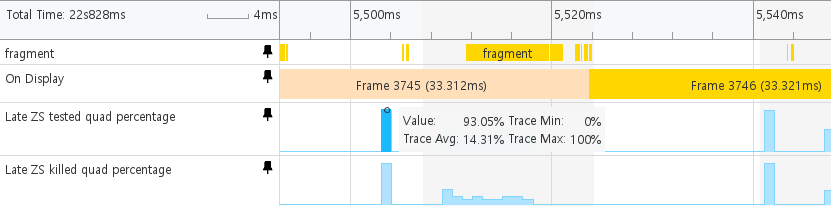
Before and after for the shader precision change
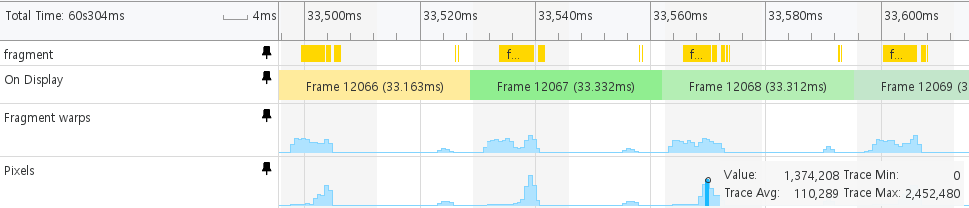
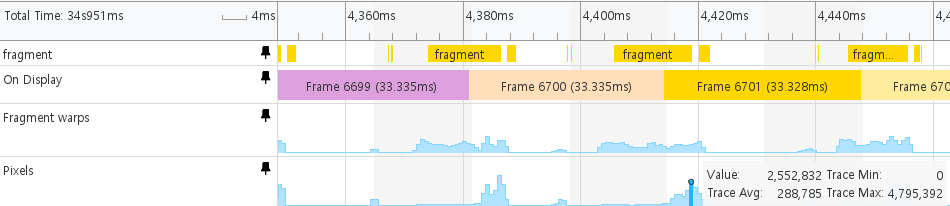
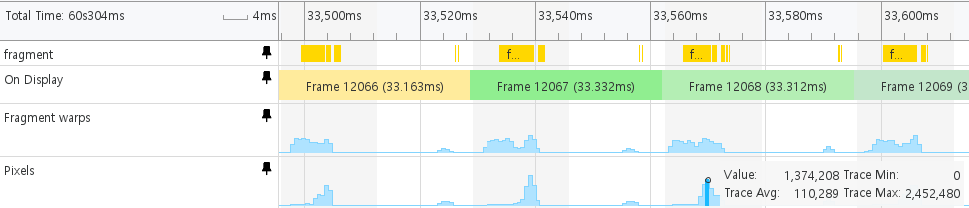
Android Performance Analyzer allows quick access to multiple trace files and provides an environment to compare them by opening them in side-by-side tabs. Netmarble heavily used this feature to conduct detailed comparative analyses on the GPU load and rendering times before and after adjusting shader precision.
The following images show screens comparing shader precision change.

Before and after using upscaling
Using the same side-by-side comparison tabs, Netmarble clearly validated pre- and post-optimization performance changes for their upscaling implementation. By synthesizing FPS analysis, specific GPU counters, and event data obtained through the Vulkan CPU timing layer, they measured the exact performance benefits and overhead of using upscaling across different scenes.
Broad GPU compatibility and stability
To address the diverse hardware fragmentation of the Android ecosystem, Android Performance Analyzer supports all major GPU vendors. Using Android Performance Analyzer's device connection stability, Netmarble performed cross-validation across various GPU chipsets across a wide range of Android devices.
Get started
Android Performance Analyzer has transformed the complex GPU profiling process into a highly visual and data-driven experience. As demonstrated by Netmarble's game 'Seven Deadly Sins: Origin', Android Performance Analyzer can help your game achieve peak performance on target devices.
Experience the Android Performance Analyzer Beta today. For detailed installation instructions and a deeper dive key features, check out the official Android Developer documentation.